


Komodo National Park
Komodo National Park is made up of several islands, including the only islands in the world where you can find wild Komodo Dragons. modo National Park is located in the center of the Indonesian archipelago, between the islands of Sumbawa and Flores. Established in 1980, initially the main purpose of the Park was to conserve the unique Komodo dragon (Varanus komodoensis) and its habitat. However, over the years, the goals for the Park have expanded to protecting its entire biodiversity, both terrestrial and marine. In 1986, the Park was declared a World Heritage Site and a Man and Biosphere Reserve by UNESCO, both indications of the Park's biological importance. These habitats harbor more than 1,000 species of fish, some 260 species of reef-building coral, and 70 species of sponges. Dugong, sharks, manta rays, at least 14 species of whales, dolphins, and sea turtles also make Komodo National Park their home.

Komodo Dragons
Komodo dragons are the largest, heaviest lizards in the world, full-grown adults can reach 10 feet long and weigh more than 300 pounds. They are one of the very few lizards with a venomous bite, once thought to contain just a deadly bacteria. After attacking and biting its prey, the mix of the deadly venom as well as a nasty bacteria slowly infects their prey and will cause it to become very weak over a few days or even weeks. There are fewer than 3,500 Komodo dragons left in the wild, with some estimates placing the number of adult dragons around 1,400, though the total population of adults and juveniles may be higher. The species is listed as Endangered due to threats such as habitat loss, poaching, and competition for prey.


Juvenile Komodo Dragon

Collard Kingfisher
The Collard Kingfisher is a medium-sized kingfisher belonging to the subfamily Halcyoninae, the tree kingfishers.

Snorkelling In Komodo National Park

Reef Manta Ray
Reef Mantas are one of the largest ray species, yet they feed on tiny plankton. They are regularly seen on coastal and oceanic reefs. Reef manta rays are widely distributed throughout the tropical and subtropical regions of the Indian and West Pacific Ocean. However they are also threatened by targeted fisheries driven by the demand for their gill plates. Climate change is also likely to affect the abundance of the zooplankton prey upon which this species relies. Just like thousands of other marine species they are caught in nets and discared fishing gear.

Green Sea Turtle
The green turtle is one of the largest sea turtles and the only herbivore among the different species. Green turtles are in fact named for the greenish color of their cartilage and fat, not their shells. Green turtles are found mainly in tropical and subtropical waters. Like other sea turtles, they migrate long distances between feeding grounds and the beaches from where they hatched. Classified as endangered, green turtles are threatened by overharvesting of their eggs, hunting of adults, being caught in fishing gear and loss of nesting beach sites.
West Bali National Park
We spent an entire day in the National Park with a couple of guides from Bali Birding Tours, which was just an absoloutley fantasic experience. Ive never seen so many species of wild animals in one day! We saw the endagnered Bali Mynas, four difference species of Kingfishers, Bee-eaters, Nightjars, Scops Owls, Javan Banded Pitta, Ebony Leaf monkeys & Maqaques, and so many other incredible species.

Bali Myna
The Bali Myna othetwise known as the Bali Starling is a species is endemic to the island of Bali, Indonesia, where it formerly ranged across the north-west third of the islandqualifies as Critically Endangered because it has an extremely small range and a tiny population which is still suffering from illegal poaching for the cagebird trade. Releases of captive-bred birds have boosted the population, but it is uncertain how many of these have yet bred successfully in the wild. Here at the West Bali National park they have made it their mission to protect them and make it a primary site for its conservation and the location of some of the last remaining wild birds.

Sacred Kingfisher
a medium-sized woodland kingfisher that occurs in mangroves, woodlands, forests and river valleys

Roufus Backed Kingfisher
A truly tiny kingfisher, it's only 12.5 – 14.5 cm long, is found in parts of Maritime Southeast Asia.

Chestnut Headed Bee-Eater
The Chestnut-headed Bee-eater is a resident breeder in the Indian Subcontinent and adjoining regions, ranging from India east to Southeast Asia.

Javan Kingfisher
Sometimes called the blue-bellied kingfisher endemic to the Indonesian islands of Java and Bali. Feasts on insects and amphibians.

Cerulean Kingfisher
The Cerulean Kingfishers is a River Kingfisher found in Indonesia. It is sometimes referred to as the Small Blue Kingfisher.
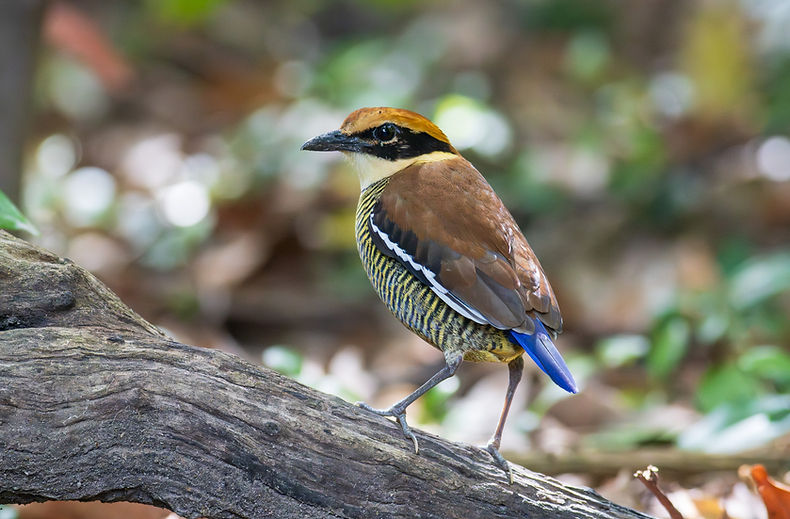
Javan Banded Pitta
The Chestnut-headed Bee-eater is a resident breeder in the Indian Subcontinent and adjoining regions, ranging from India east to Southeast Asia.

Sunda Scops-Owl
The Sunda Scops Owls grows from 20 to 25 cm and can weigh 100 to 170 grams. It has relatively long wings and a short tail. Mostly living in trees, the scops owl is able to camouflage well with its greyish-brown feathers. The plumage looks like the bark of a tree, with blackish streaks. The owl has small ear tufts, visible when on alert.

Savanna Nightjar
Their grey-brown, mottled, streaked and stripey plumage provides ideal camouflage in the daytime. Moths compose 80-85% of savanna nightjar food composition, but they also feed on beetles, ants, grasshoppers, crickets, wasps and bees.
Travelling through Bali


